
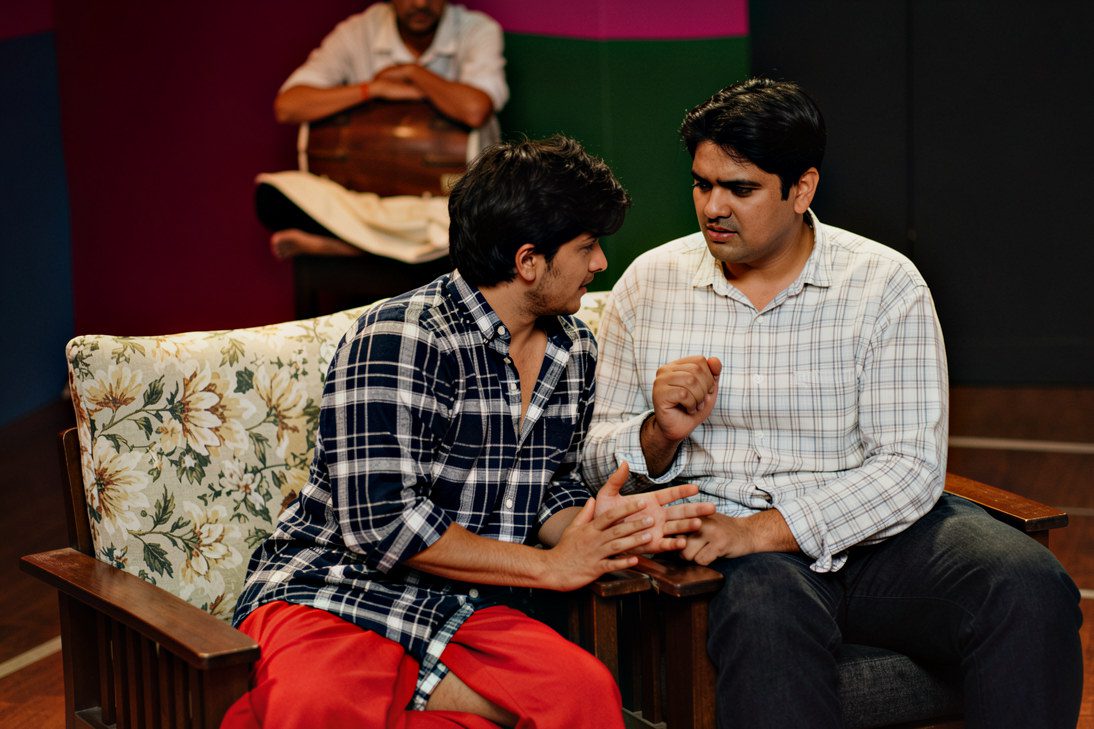
A director asks two actors to perform a breakup scene slowly and deliberately, the way many young actors instinctively approach heartbreak. The scene feels sad but strangely flat-technically correct, yet emotionally distant. He then asks them to perform the exact same lines again, twice as fast, without changing anything else. Not a single word is different. This time, the scene reveals barely contained panic: two people talking over their own feelings because slowing down feels too dangerous. The result is far more heartbreaking than the first version.
Tempo is the speed at which a scene moves. Rhythm is the pattern of stresses, pauses, and variations within that speed. Both communicate urgency, power, and emotional truth alongside dialogue. A change in the pace or rhythm of an exchange can influence how an audience experiences a scene, sometimes before they have fully processed the words. This article explores how tempo and rhythm work in acting and how actors can learn to use them deliberately rather than leaving them to chance.
What Tempo and Rhythm Actually Mean in Performance
Tempo and rhythm are related but distinct. Tempo describes overall speed – how quickly lines are exchanged, how fast a character moves, how rapidly a scene unfolds. Rhythm describes the pattern within that speed – where the stresses fall, where pauses land, whether an exchange feels smooth and flowing or clipped and fragmented.
Two scenes can share an identical tempo and still feel completely different because of rhythm. A conversation delivered at a moderate pace with long, even sentences reads very differently from one delivered at the same overall pace but broken into short, interrupted fragments. Tempo tells you how fast the scene is moving. Rhythm tells you what that movement actually feels like.
Why Tempo and Rhythm Communicate Before Words Do
Audiences often respond to the pattern of an exchange-the pauses, interruptions, and sudden changes in pace-alongside the words being spoken. This is similar to how tone of voice communicates meaning in everyday conversation. For example, a rushed, uneven delivery may suggest anxiety before a listener has fully processed the literal meaning of the sentence.
This is why tempo and rhythm are such valuable tools for actors. They can help communicate a character’s internal state through the way dialogue is delivered, rather than requiring the actor to explain every emotion through words alone.
Internal Tempo vs Imposed Tempo
A director’s note to “pick up the pace” is one of the most commonly misunderstood instructions in rehearsal. It often refers to a greater sense of urgency rather than simply speaking faster. If an actor responds by increasing their speed without changing what is driving the scene, the result can feel rushed, mechanical, and disconnected from the character’s emotional reality.
Effective tempo shifts should grow out of changes in the character’s stakes, objective, or tactic-the same elements explored during script analysis and scene breakdown .
Tempo should not be treated as a mechanical adjustment made independently of the character’s circumstances. When speed becomes the focus instead of the character’s needs, the scene may become technically faster without gaining emotional intensity.
How Tempo and Rhythm Signal a Turn in a Scene
A scene’s turn-the moment a character changes their approach, discovers something new, or responds to a shift in circumstances-is often accompanied by a change in tempo or rhythm, even when the dialogue does not explicitly announce it. For example, a character who has been speaking quickly and urgently might suddenly become still and quiet after realising that arguing further is pointless. Similarly, a character delivering calm, measured responses might begin speaking faster when they sense they are losing control of the conversation.
Actors who identify a scene’s turn during script analysis can use tempo and rhythm deliberately to highlight that change. Instead of performing the entire scene at a uniform pace and relying on the dialogue alone to communicate the shift, they can adjust their delivery to reflect the character’s changing thoughts, objectives, or emotional circumstances.
How Tempo and Rhythm Reveal Given Circumstances and Emotion
| Pattern | What It May Communicate |
| Fast, clipped exchanges | Urgency, excitement, or panic |
| Slow, deliberate pace | Confidence, exhaustion, or deep thought |
| Uneven or erratic rhythm | Nervousness, internal conflict, or uncertainty |
| Steady, even rhythm | Control, formality, or suppressed emotion |
| Long pauses or silence | Withheld information, active decision-making, or a shift in power |
These patterns are not fixed rules. The same rhythm can communicate different emotions or intentions depending on the scene’s context and given circumstances. They are useful starting points for identifying what a scene’s pacing may be communicating-whether intentionally or unintentionally.
Tempo and Rhythm Across Genres
Comedy relies heavily on rhythmic precision. Comic timing-the ability to place pauses, reactions, and lines at just the right moments—can determine whether a joke lands or falls flat. A pause that lasts slightly longer than expected can create anticipation, while a quicker response can produce surprise. Actors develop this sense of timing through repetition, experimentation, and careful attention to how each beat affects the audience.
Drama often uses contrast to create tension rather than relying on constant intensity. A rapid exchange followed by sudden stillness can reveal more than a scene performed at the same high energy throughout. Moving between urgency and uncomfortable silence allows the audience to experience shifts in power, hesitation, and emotional pressure more clearly.
Classical and verse texts introduce another layer of rhythmic complexity. Shakespeare’s verse contains an underlying rhythm shaped by the structure and stresses of the language. Actors can explore this rhythm through phrasing, emphasis, and vocal musicality. At important moments, deliberately disrupting the expected rhythm may suggest emotional upheaval, hesitation, or a character’s loss of control.
Cicely Berry’s approach to classical text emphasises the physical and vocal experience of language. Her work encourages actors to explore how rhythm, breath, stress, and phrasing can bring text to life rather than treating verse as something to be understood only through intellectual analysis.
Common Mistakes With Tempo and Rhythm
Playing an entire scene at one uniform pace, regardless of changing stakes or new discoveries, is one of the most common mistakes actors make with tempo. It can flatten even well-written material by removing the variations that keep a scene alive.
Another common mistake is equating slowness with seriousness. Many young actors instinctively slow down during emotional scenes, assuming that a slower delivery will create depth. However, excessive slowness can weaken the urgency and emotional energy that make a moment effective.
Rushing through emotional beats because of nervousness can also reduce their impact. Speed should come from the character’s circumstances, not simply from the actor’s discomfort. Similarly, treating pauses as empty spaces to fill or rush through overlooks their dramatic potential. A pause can be an active choice that reveals hesitation, conflict, restraint, or an important internal shift.
Practical Exercises for Developing Tempo and Rhythm Awareness
Playing the same scene at three clearly different tempos—fast, slow, and at a natural pace-can reveal meanings that an actor may not notice at their usual speed. The purpose of this exercise is not to find one “correct” version of the scene, but to develop sensitivity to how tempo alone can influence meaning, even when the words remain unchanged.
Reading a monologue aloud at different speeds can also reveal where the natural rhythm of the text shifts. Try performing it once faster than usual and once much more slowly, then observe where pauses, stresses, and changes in energy feel most natural. These shifts can be difficult to notice when reading at a comfortable, default pace.
Anne Bogart and Tina Landau’s Viewpoints approach treats tempo as one of several concrete, trainable elements of physical performance. Exploring tempo through structured exercises gives actors a shared vocabulary for observing and adjusting movement, speech, and energy deliberately rather than relying entirely on instinct.
How Rangshila Theatre Group Trains Tempo and Rhythm
Founded by Awnish Kumar Mishra on 18th January 2008, Rangshila Theatre Group has trained more than 2,000 students in Versova, Andheri West, Mumbai. As an acting school in Mumbai , its training approach treats tempo and rhythm as practical, trainable skills rather than abilities that actors must rely on instinct alone.
The Instrument stage develops the vocal and physical control that tempo and rhythm require. Students work on breath support, voice, and physical awareness to build the control needed to sustain deliberate pacing choices instead of relying on habitual speed.
The Craft stage connects these skills to scene analysis. Students learn to identify key turns in a scene and use changes in tempo and rhythm to highlight them, linking pacing choices to the character’s objectives, tactics, and changing circumstances.
With faculty trained at institutions including BNA and NSD, Rangshila incorporates tempo and rhythm into its broader technical and performance training, helping students approach pacing as an intentional part of their acting process.
The Bottom Line
The same line, delivered at a different speed and with a different internal rhythm, can communicate an entirely different emotional truth. Tempo and rhythm are not decorative elements added to a performance. They are essential tools actors can use to shape an audience’s experience, sometimes before the full meaning of the words has registered.
Learning to recognise and adjust tempo and rhythm deliberately transforms pacing from an unconscious habit into a purposeful part of the acting process. It allows actors to make clearer, more responsive choices based on their character’s objectives, emotions, and changing circumstances.
If you want hands-on practice developing this kind of vocal and physical control, explore our acting classes in Mumbai or get in touch with us directly.
Frequently Asked Questions
Tempo is the overall speed at which a scene unfolds. Rhythm refers to the pattern of pauses, stresses, interruptions, and variations within that speed. Two scenes can have the same tempo but feel completely different because of their rhythm.
A change in tempo can affect a scene’s emotional tone and energy. Faster delivery may suggest urgency or panic, while a slower pace may communicate hesitation or reflection. The effect also depends on the character’s intentions and circumstances.
Both. Script analysis helps actors identify moments when a character’s objective or approach changes. Rehearsal then allows them to experiment with different tempos and rhythms to find what best supports the scene.
Comedy often relies on precise timing, including the placement of pauses, reactions, and lines. Drama frequently uses contrasts between rapid exchanges and moments of stillness to build tension. Both genres use tempo and rhythm to shape the audience’s experience.
No. Slowing down does not automatically create emotional depth. Some scenes require stillness and reflection, while others depend on urgency and rapid exchanges. The appropriate tempo should come from the character’s objectives, stakes, and circumstances.
The note may refer to urgency rather than simply faster speech. Instead of increasing speed mechanically, actors should explore what their character wants, what is at stake, and why the moment feels pressured. This helps create a more natural and purposeful tempo shift.