
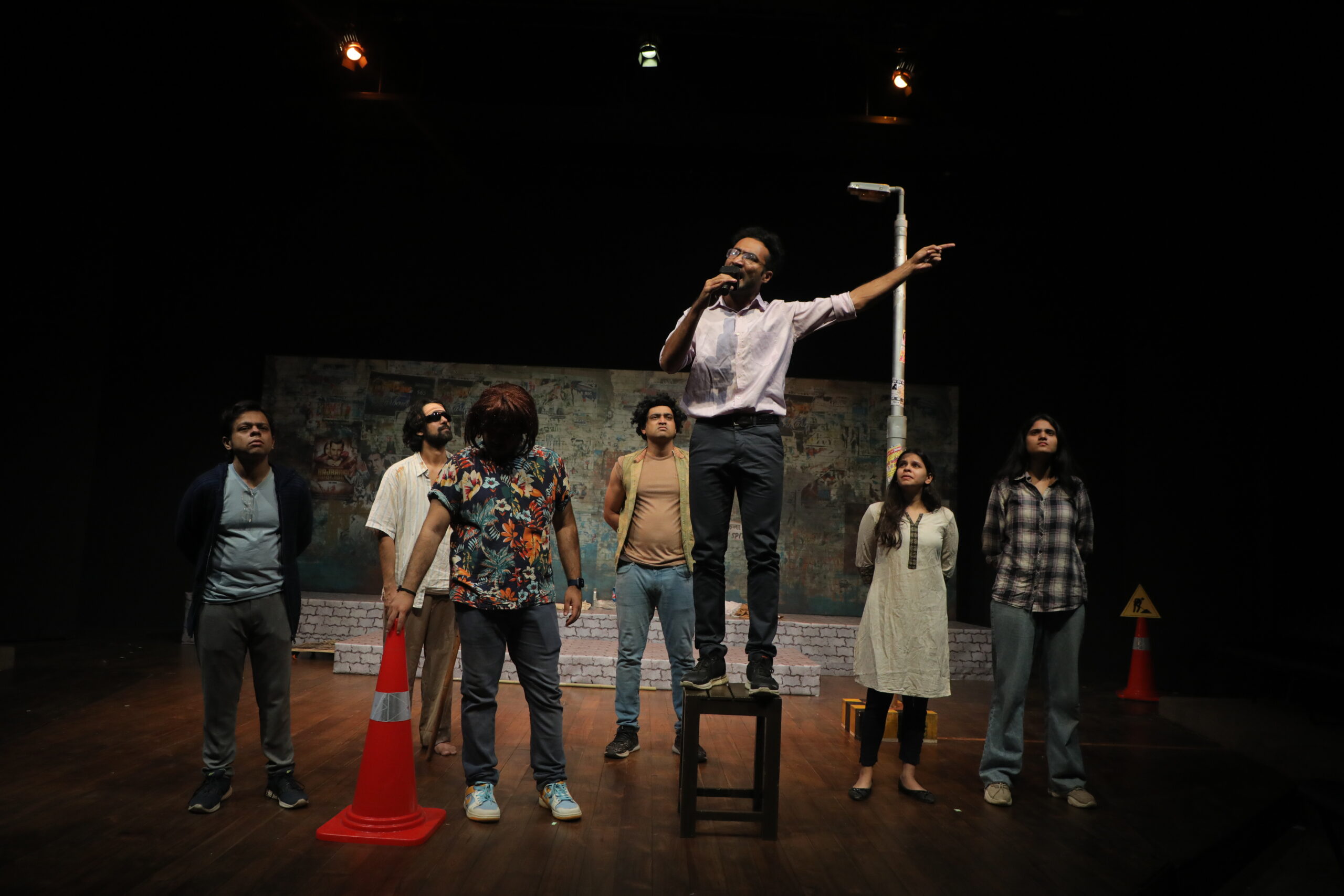
Across Mumbai’s film sets, casting rooms, and rehearsal spaces, a significant shift is underway. The brooding, isolationist, “become the character” philosophy that dominated Indian acting conversations for nearly two decades is losing ground – fast. In its place, something older, sharper, and arguably more powerful is making a comeback: Classical Acting technique.
At Rangshila Theatre Group, we have been watching this shift unfold in real time. Through professional acting training in Mumbai, we’ve seen directors increasingly value theatre-trained actors for their consistency, adaptability, and technical skills.
Is Method Acting Dead?
Method acting is not dead, but many Indian directors are increasingly favouring actors with strong classical acting training. Classical techniques help actors perform consistently, adapt to direction, collaborate effectively, and deliver emotionally authentic performances on professional film and theatre sets.
Quick Take
- Method acting is still used but is no longer the only acting approach.
- Many Indian directors value consistency and adaptability.
- Classical acting improves voice, movement, and stage presence.
- Professional actors need emotional control, not emotional exhaustion.
- Theatre training builds technical skills for film, OTT, and stage performances.
- Both methods have value when used appropriately.
What Happened to Method Acting?
Method Acting, rooted in the teachings of Konstantin Stanislavski and later popularized in Hollywood through actors like Marlon Brando and Robert De Niro, arrived in India with enormous fanfare. The promise was electrifying: don’t just play the character – become them.
Indian cinema, always hungry for emotional depth, embraced it. Actors began preparing for months. Some moved into slums to “understand poverty.” Others learned obscure dialects for three-line roles. The commitment was real. Occasionally, so were the results.
But here is what film schools and fan pages rarely discuss: Method Acting, at its extreme, is deeply inefficient — and Indian film production cannot afford inefficiency.
A Bollywood shoot runs on tight schedules, rotating crews, back-to-back scenes shot out of sequence, and directors who need their actors present, responsive, and collaborative – not lost in a psychological spiral trying to access a traumatic memory from age seven. When a director says “reset,” they need the actor to reset – not to remind everyone that their “process requires space.”
Several prominent Indian directors, speaking off the record in industry conversations, have expressed fatigue with actors who arrive on set “too deep in character” to take direction. One noted filmmaker reportedly said: “I don’t want an actor who has disappeared into the role. I want an actor who can find the truth and still hear me.”
The Classical Comeback – What It Actually Means
Classical Acting technique does not mean wooden, theatrical, or old-fashioned. That is a misconception worth destroying immediately.
Classical technique – which forms the foundation of training at every serious top acting school in Mumbai, including Rangshila Theatre Group – is built on four core pillars: observation, physical control, emotional availability, and technical precision.
Unlike Method Acting, which often begins internally and can collapse into self-obsession, classical training teaches actors to work outward — to listen, respond, adapt, and serve the story. The actor becomes an instrument, not the entire orchestra.
This is exactly what Indian directors are rediscovering.
Method Acting vs Classical Acting: Key Differences
| Method Acting | Classical Acting |
| Focuses on internal emotional experience | Focuses on technique and performance skills |
| Deep character immersion | Controlled emotional expression |
| Can be mentally demanding | Easier to repeat across multiple takes |
| Individual process | Collaborative approach |
| Useful for certain roles | Suitable for theatre, films, and OTT productions |
Why classical technique works on Indian film sets:
1. It is repeatable. A classically trained actor can deliver the same emotional truth in take one and take seventeen. Method actors often peak in take one and deteriorate. With Hindi films shooting upward of 20 takes per scene, repeatability is not a luxury – it is a professional requirement.
2. It respects collaboration. Classical technique trains actors to receive direction without ego. The director’s vision takes precedence. The actor’s job is to execute that vision truthfully – not to negotiate it based on their “process.”
3. It is rooted in the body AND the mind. Voice modulation, physical gesture, breath control, spatial awareness – classical training demands mastery of these tools. This is why theatre-trained actors consistently outperform self-taught Method actors in long, uncut shots that OTT platforms increasingly favour.
4. It is culturally authentic. India has its own extraordinary classical performance traditions – from Natyashastra to Bharatanatyam to folk theatre forms like Tamasha and Nautanki. Classical acting technique, as taught in serious theatre groups, is deeply compatible with India’s performance heritage. It does not require actors to import a Western psychological framework and force it onto Indian stories.
The Theatre School Advantage
This is not theoretical for us. At Rangshila Theatre Group – one of the most respected and best acting schools in Mumbai – our curriculum was built around classical foundations from day one. Our training in The Craft, The Instrument, and The Technique produces actors who understand both the why and the how of performance.
Our alumni are booking roles on OTT platforms, feature films, and theatre productions not because they suffered through Method isolation exercises – but because they can walk onto any set, receive direction, find emotional truth on command, and do it again fourteen times without falling apart.
What This Means If You Are an Aspiring Actor in 2026
If you are currently deciding where to train, this conversation matters enormously. Choosing a school that worships Method Acting as the only valid path is, in 2026, a strategic mistake.
The industry has moved. Casting directors know the difference between an actor who has “lived the role” for six months and cannot take notes – and an actor with rigorous classical training who can break your heart in scene three, laugh genuinely in scene four, and nail a comedic moment in scene five. The second actor gets hired again.
The top acting school in Mumbai is not the one with the most dramatic testimonials about actors who slept on streets for research. It is the one producing technically refined, emotionally alive, professionally reliable artists.
At Rangshila Theatre Group, that is precisely what we have been doing since 2008.
Expert Tip
Professional actors don’t rely on a single acting method. The most successful performers combine emotional truth with strong technical skills, allowing them to adapt to different directors, productions, and performance styles.
Conclusion
Method Acting is not entirely dead. At its best – disciplined, boundaried, collaborative – it still has value. But its unchecked, mythologised version, the kind that prioritises the actor’s “journey” over the director’s vision and the audience’s experience, is quietly being shown the door on Indian film sets.
Classical technique is not a retreat to the past. It is a return to what actually works.
And if you are ready to learn what actually works – in a city that rewards craft, consistency, and courage – the stage at Rangshila is waiting for you.
Interested in professional acting training in Mumbai?
Explore Rangshila Theatre Group’s acting workshops to learn classical acting techniques, stagecraft, voice training, and performance skills through practical theatre experience.
Frequently Asked Questions
Yes. Many actors still use method acting, but most professionals combine it with other acting techniques depending on the role.
Classical acting focuses on voice, movement, physical control, script analysis, and technical performance skills.
Neither is universally better. The best actors understand multiple techniques and use the one that suits the role and production.
Because classically trained actors are consistent, adaptable, and able to perform well across multiple takes while taking direction effectively.
Yes. Classical acting provides a strong foundation for theatre, film, television, and OTT performances.
Most theatre schools teach classical acting first because it builds strong fundamentals in voice, movement, discipline, script analysis, and stage presence before actors explore advanced acting techniques.