
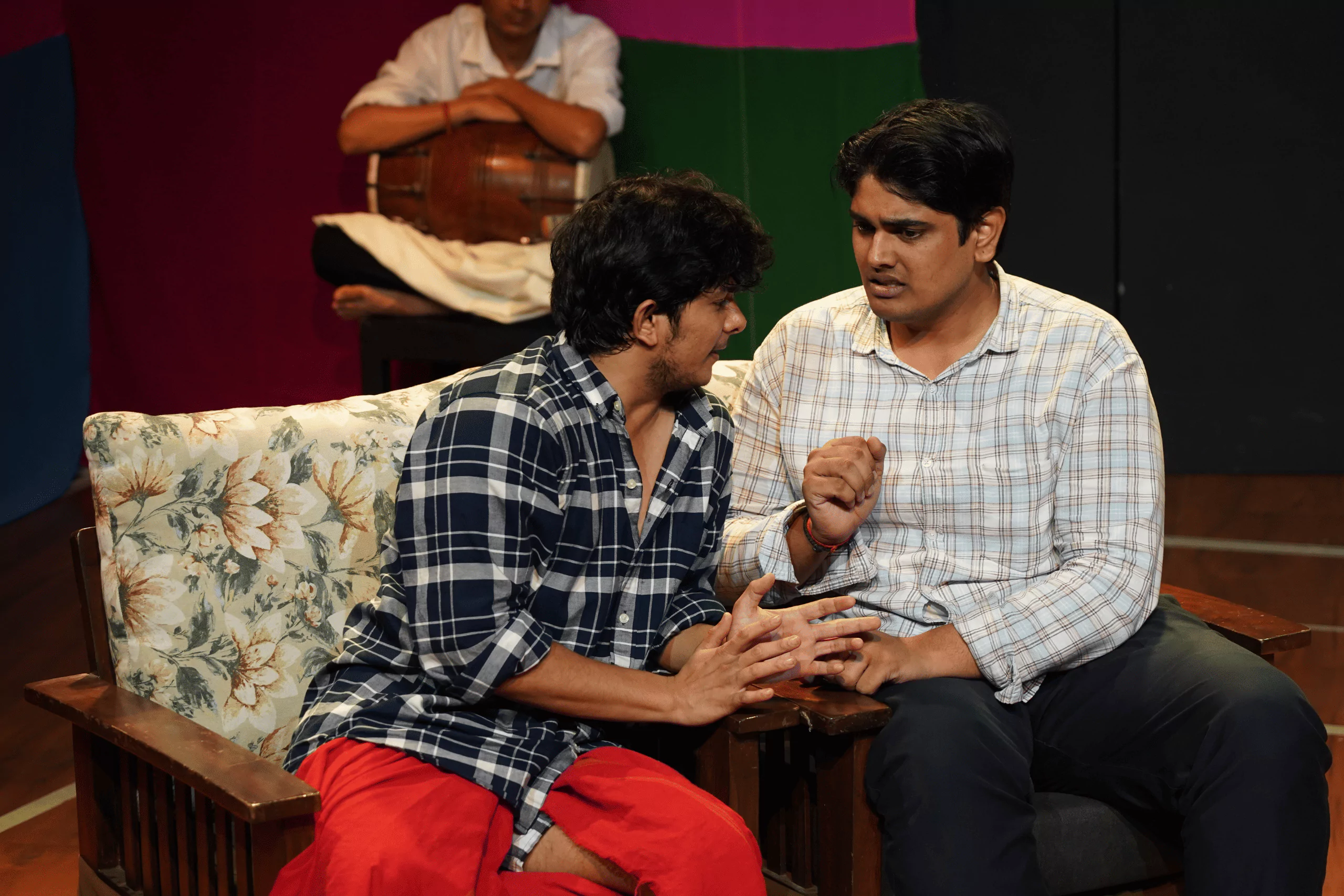
There is a moment that almost every actor experiences at least once – perhaps during a rehearsal, while watching a recording of their own performance, or during feedback after a workshop session. It is the moment when someone tells them, gently or otherwise, that they are doing too much. That the performance feels big, broad, or pushed. That it does not quite land as real.
This is the territory of overacting vs natural acting – one of the most important and most misunderstood distinctions in the craft of performance. Understanding this distinction, clearly and precisely, is one of the things that separates actors who continue to grow from those who plateau.
At Rangshila Theatre Group, one of the most respected acting schools in Mumbai, we explore this distinction in every session and at every stage of training. The difference between a character and a caricature is not a matter of talent-it is a matter of understanding. Through serious, structured training, actors can develop that understanding until it becomes instinctive.
What Is Overacting – Really?
Before exploring overacting vs natural acting, let’s first define overacting. The term is often misunderstood.
Overacting is not the same as big acting. Some roles require large, stylised, physically heightened performances. Broad comedy, certain theatrical traditions, and specific stylistic approaches all involve deliberate amplification that is entirely appropriate to the material. This is not overacting.
Overacting is something more specific. It is the externalisation of emotion or intention beyond what the truth of the situation actually demands. It happens when an actor tries to be seen, demonstrate emotion, or signal meaning to the audience. Instead of responding truthfully to the imagined circumstances, the performance becomes controlled rather than genuine.
In simpler terms, overacting happens when an actor performs for the audience instead of living truthfully within the scene. The result is a caricature-a character that feels assembled from the outside rather than discovered from the inside. Instead of revealing a genuine human being, the performance relies on external signals: this gesture means grief, this tone of voice means anger, rather than allowing authentic emotional experience to shape the character naturally.
Furthermore, overacting is almost always unconscious. Very few actors deliberately choose to overact. It is usually the result of anxiety, the desire to do well, or the fear that if they do not express their emotions clearly enough, the audience will not understand or feel them. In this sense, overacting vs natural acting is not primarily a technical problem-it is a psychological one.
1. The Root Cause – Performing Instead of Living
The root cause of overacting is almost always the same: the actor performs the character instead of living as the character.
When actors perform, they stay slightly outside the role. They observe themselves, control their expressions, and focus on whether the audience understands their emotions. Instead of reacting naturally, they think about how the character should look, sound, and behave.
Actors who truly live as their character approach the scene differently. They become fully immersed in the character’s circumstances and respond honestly to what is happening in the moment. They are not trying to look sad or angry—they are simply experiencing the emotional reality of the scene.
This difference becomes obvious in performance. An actor who performs grief often relies on familiar expressions and gestures that audiences recognise as sadness but rarely believe. An actor who lives the emotion allows subtle facial expressions, body language, and vocal changes to emerge naturally, making the performance feel authentic.
This is the essence of overacting vs natural acting: one is about showing emotions, while the other is about living them.
At Rangshila Theatre Group, The Craft stage of our training helps actors make this shift. Instead of relying on external signals, students learn to develop genuine emotional access and respond truthfully in every performance.
2. How to Recognise Overacting in Your Own Performance
One of the challenges of overacting vs natural acting is that overacting is very difficult to detect from the inside. When you are overacting, it often feels like you are doing the most committed, most generous, most fully invested version of the performance. Doing more often feels like doing better-even when it isn’t.
However, there are specific signals that can help an actor recognise when their performance has drifted into overacting territory:
You are thinking about how you look.When your attention shifts towards monitoring the audience’s reaction, you lose the presence required to fully live within the scene. Genuine presence in a role leaves almost no attention available for external monitoring.
Your emotions arrive on cue – if you find yourself producing emotion at the same moment in every run-through, with the same quality and intensity, it is likely that the emotion has become a performance choice rather than a genuine response. Real emotional responses vary – they surprise you, arrive unexpectedly, and shift in quality between performances.
You are working hard – overacting is physically and emotionally effortful in a specific way. Genuine truthful performance, when it is working, tends to have a quality of ease – not lack of commitment, but the ease of someone responding naturally rather than managing a constructed effect. If performing feels like a constant effort to sustain something, it is worth asking what you are working to sustain and why.
People can tell what you are feeling before you express it – when an actor telegraphs their emotional state – sets it up visibly before it arrives – the performance loses all surprise and spontaneity. Natural acting lets audiences feel emotions naturally as the moment unfolds, instead of being guided towards a specific reaction.
3. The Caricature – What Overacting Produces
When overacting replaces truthful performance, the result is a caricature. It becomes a character shaped by obvious external qualities rather than genuine inner life.
A caricature is recognisable. It relies on clear, consistent signals for every emotional state. Grief always looks the same. Anger always sounds the same. Joy is always expressed at the same volume. These fixed patterns make it feel false because real human beings are naturally inconsistent.
Real people experience and express emotions in different ways. Grief can be quiet, loud, physical, or contained. Anger can make someone still rather than expressive. Joy can sometimes appear as tears rather than laughter.
The caricature, by contrast, is a fixed external shape. It comes from the actor’s choices rather than the character’s genuine inner life and truthful responses. Consequently, audiences sense it immediately – not necessarily consciously, but through the subtle feeling that something is not quite real.
4. What Natural Acting Actually Looks Like
Natural acting is not the absence of technique. It is technique that has been absorbed so deeply that the actor no longer consciously thinks about applying it. Instead, they respond with genuine presence and truth because the preparation already exists beneath the performance.
Natural acting produces characters that surprise audiences-and sometimes even the actors portraying them. It produces moments that vary between performances, because they arise from genuine response to the imagined circumstances rather than from the execution of predetermined choices. It produces the quality that audiences describe as “real” or “believable” or “true” – the felt sense of watching a human being rather than an actor.
Furthermore, natural acting is almost always quieter than overacting. Not because it contains less emotion, but because genuine feelings appear through specific physical and vocal responses. These subtle details are often more powerful than the broad signals used in overacting. It appears in the slight change in breathing, the stillness before a significant moment, or the way a voice changes texture rather than volume when feeling something deeply. These are the details that natural acting produces – and they are the details that stay with audiences long after the performance has ended.
At Rangshila Theatre Group, our approach to overacting vs natural acting runs through every aspect of our training. From The Outlook Training, which develops genuine observational depth and sensory awareness, to The Instrument, which builds precise physical and vocal control, to The Craft, which develops genuine emotional access and truthful response – every stage of our programme works to develop the internal richness and truthful expressiveness that natural acting requires.
5. The Role of Training in Moving from Overacting to Natural Acting
The transition from overacting to natural acting is rarely a sudden breakthrough. It is a gradual process of developing greater internal access, greater trust in genuine response, and a greater willingness to resist the instinct to demonstrate.
Some of the most important elements of this transition include:
Developing genuine emotional access – the actor who has genuinely accessed a specific emotional state does not need to perform it. The expression follows naturally from the internal reality. Techniques like sense memory and emotional recall – both foundational to the training at Rangshila Theatre Group – develop this capacity for genuine internal access.
Learning to trust small impulses – natural acting depends on small, specific, and often unexpected responses. These may appear as a slight physical reaction, a shift in eye focus, or a change in breathing. These impulses are always present in genuine emotional experience. However, actors who overact often ignore these natural impulses. Instead, they look for bigger and more noticeable expressions. Learning to notice and follow small impulses is one of the most important skills in moving towards natural acting.
Developing presence rather than performance – genuine presence – the quality of being fully in the imagined circumstances, attending fully to the other actors and the developing situation – produces natural acting almost automatically. Overacting, by contrast, is almost always accompanied by divided attention – the actor is both in the scene and outside it, monitoring the performance. Developing genuine, undivided presence is therefore one of the most powerful antidotes to overacting.
Working with feedback from skilled observers – because overacting is so difficult to detect from the inside, the feedback of skilled, experienced teachers who can observe from the outside is essential in the process of developing natural acting. At Rangshila Theatre Group, our faculty – trained at institutions including BNA and NSD – provides exactly this quality of observant, honest, developmental feedback throughout our training programme.
How Rangshila Theatre Group Develops Natural Acting
Founded by Awnish Kumar Mishra on 18th January 2008, Rangshila Theatre Group has established itself as one of the most trusted acting schools in Andheri West, Mumbai – with over 2,000 students trained, 500+ performances across 150+ venues, including performances at Bharat Rang Mahotsav, and a 4.8-star rating from 420 Google reviews.
Our four-stage training programme includes The Outlook Training, The Instrument, The Craft, and The Technique.The programme helps actors develop performances that come from within rather than relying only on external expression. Every stage of our curriculum builds the internal richness, genuine emotional access, precise physical and vocal control, and truthful responsiveness that natural acting demands – and that distinguishes a fully realised character from a caricature.
We offer acting classes in Mumbai across weekday and weekend batches, as well as acting classes for beginners in Mumbai for those just starting their performing arts journey.
Frequently Asked Questions
The clearest signs of overacting include: directing significant attention outward during performance to monitor audience response, producing emotions that arrive consistently at the same moment with the same quality in every run-through, experiencing performance as effortful sustaining of a constructed effect, and telegraphing emotional states before they arrive. If any of these sound familiar, the most useful step is to return to genuine presence in the scene and trust that truthful internal experience will produce appropriate external expression.
Not always. Some performance styles, genres, and theatrical traditions deliberately use heightened, stylised performance — broad comedy, certain forms of physical theatre, and specific historical acting styles all involve deliberate amplification that is entirely appropriate. The question is always whether the amplification serves the truth of the material or replaces it.
Yes – and it is one of the most common and most valuable developments in an actor’s training. The process requires developing greater internal access, learning to trust smaller and more specific impulses, and building genuine presence rather than performed emotion. At Rangshila Theatre Group, our four-stage training programme systematically develops these capacities in actors.
Actors discover characters by exploring their inner emotional life. These characters grow from genuine emotional access, truthful responses, and a specific inner life that creates a unique human being. A caricature works differently. It relies on external signals chosen to represent a type rather than a real person. The difference may not always be obvious, but audiences can sense it immediately., but audiences can sense it immediately.
Training provides two things that self-directed development rarely can: the techniques for developing genuine internal access and truthful response, and skilled feedback from experienced observers who can see from the outside what the actor cannot see from the inside. Both are essential in the transition from overacting to natural acting, and both are central to the approach at Rangshila Theatre Group.
The Bottom Line
Overacting vs natural acting is not ultimately a question of size or scale. It is about the direction of the performance – whether it comes from the outside in or the inside out. It depends on whether the actor tries to demonstrate emotion or responds truthfully to the imagined circumstances.
Actors assemble a caricature. They discover a character. And the discovery – the patient, rigorous, deeply inward process of finding a genuinely true human being in the material – is what serious acting training is for.
If you are ready to develop the internal depth, the genuine emotional access, and the truthful expressiveness that natural acting demands, Rangshila Theatre Group is ready for you. Explore our Acting School in Mumbai page or reach out to us directly.