
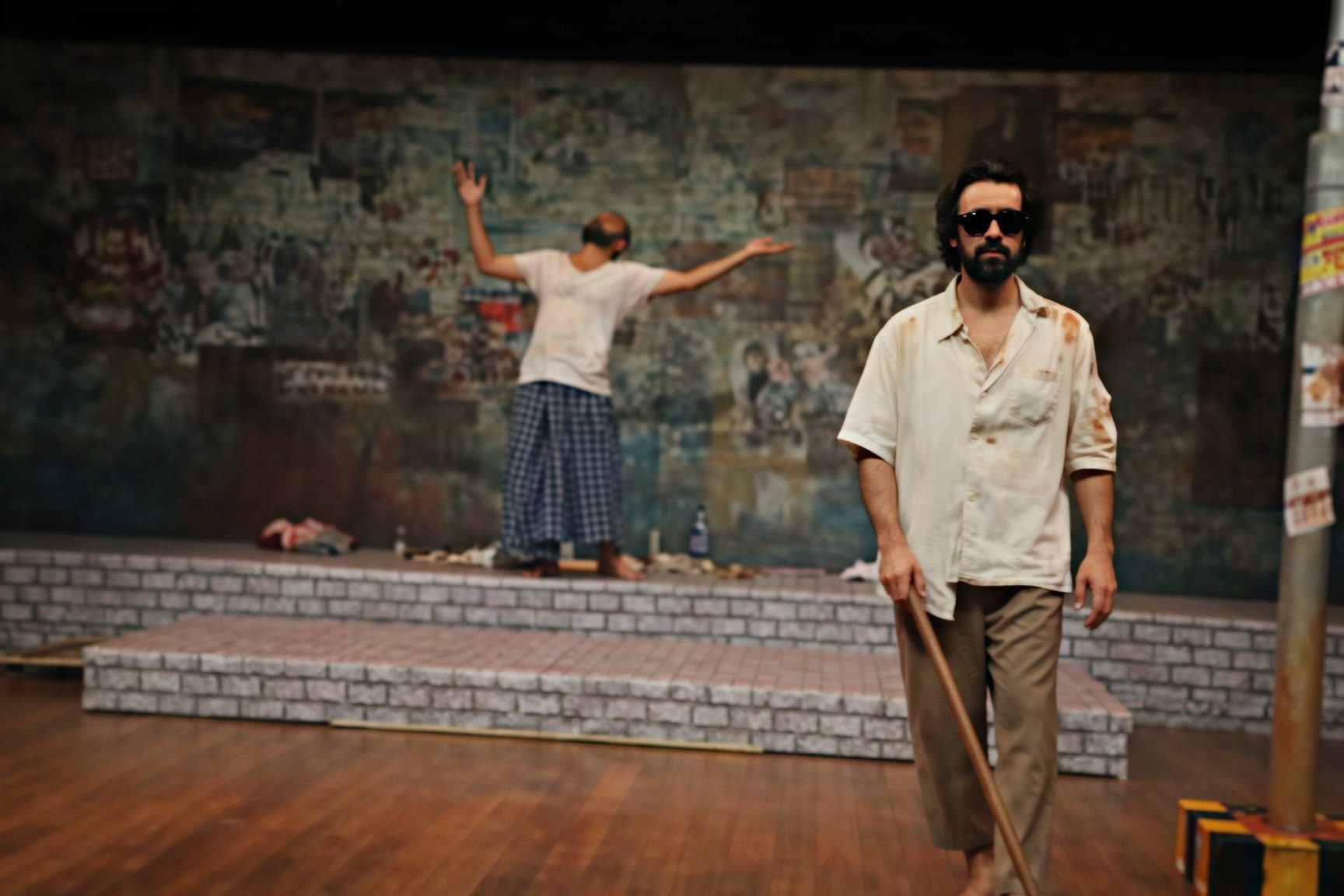
Somewhere in Mumbai right now, an actor is sitting in a train carriage, watching. Not watching their phone. Not watching the scenery. Watching a woman three seats away who is trying not to cry. The precise way her jaw is set. The way her hands keep moving as if searching for something to hold. The moment her eyes go still and distant before returning to the present, blinking too quickly.
This actor is not being intrusive. They are working. Because observation in acting is not a supplementary activity-it is the primary one. Before an actor can portray human behaviour truthfully, they must first understand it. And the only way to gain that understanding is to watch people-carefully, patiently, and with the kind of attention that most people never bring to the world around them.
At Rangshila Theatre Group, one of the most respected acting schools in Mumbai, observation is not treated as a soft skill or a creative bonus. It is the foundation. It is the very first skill we develop in our students-because without it, everything else an actor learns is built on sand.
Why Observation Is the Foundation of Acting
The purpose of acting is to create the illusion of reality-to portray human beings in human situations so convincingly that audiences forget, for the duration of the performance, that they are watching actors. Achieving this requires an extraordinary depth of understanding of how people actually behave.
Not how we think they behave. Not how we imagine they would behave in a given situation. But how they actually, specifically, and precisely behave-in all their particularity, inconsistency, and surprising individuality.
This understanding does not come from imagination alone. It comes from observation. Consequently, an actor who has spent years watching the world-genuinely watching, with full attention and genuine curiosity-has access to a richness of behavioural detail that no amount of technical training can replace.
Moreover, observation in acting is not simply about collecting material. It is about developing a particular quality of attention-a way of being present to the world that is more complete, more precise, and more genuinely curious than ordinary awareness. That quality of attention becomes one of the most valuable assets an actor brings to every performance.
1. What Observation Actually Means for an Actor
When acting teachers talk about observation, they do not mean casual people-watching. They mean something much more specific and much more demanding.
Observation in acting means attending to the full complexity of human behaviour-not just the obvious signals of emotion and intention, but the subtle, contradictory, and often unconscious details that reveal a person’s inner life beneath the surface.
It means noticing the specific rhythm of someone’s speech-not just what they say, but how they say it, where they pause, what they emphasise, which words they seem to search for, and which arrive effortlessly. It means noticing how someone’s posture changes when they feel observed. How they hold their hands differently in a confrontation than in a comfortable conversation. How they laugh when something is genuinely funny versus when they laugh simply to be polite or fit into a social situation.
These details are everywhere. However, most people-even most aspiring actors-do not notice them. They are too absorbed in their own experiences, narratives, and responses to the world to fully attend to someone else’s.
Developing observation in acting is, in large part, about learning to step outside your own experience and genuinely attend to someone else’s.
2. Observation and Empathy – The Connection
There is a deep connection between observation in acting and the quality of empathy that great acting demands. Genuine observation-the kind that notices the specific, particular details of another person’s behaviour-is itself a form of empathy. It is the act of paying someone the respect of seeing them fully, rather than reducing them to a type or a function.
When an actor observes a specific human being in a specific moment-really observes them, with full, patient attention-they are doing something that goes beyond data collection. They are, however briefly, beginning to understand what it might feel like to experience the world from another person’s perspective.
Furthermore, this observational empathy feeds directly into character work. The actor who has observed grief in real human beings-who has seen how it inhabits the body, how it changes the voice, and how it affects the rhythm of thought and speech-brings a qualitatively different understanding of grief to a role than one who has only imagined it.
At Rangshila Theatre Group, The Outlook Training-the first stage of our four-stage programme-is specifically designed to develop this observational empathy. It trains actors to see the world with fresh eyes, notice what most people overlook, and develop genuine curiosity about the inner lives of the people around them.
3. The Actor’s Eye – What to Look For
Developing observation in acting means training yourself to notice specific categories of human behaviour that are especially valuable for character work. Some of the most important include:
- Physical behaviour under emotional pressure – How does the body respond to fear, grief, joy, anger, embarrassment, or tenderness? Which physical reactions appear instinctively, and how do they differ from person to person?
- The gap between words and feelings – How do someone’s body language, vocal quality, and rhythm of speech reveal what they are actually feeling when their words suggest something different? What signals reveal suppressed emotion, social performance, or unconscious self-revelation?
- Habitual behaviour – How does this individual gesture, move, sit, or occupy space? What patterns and rhythms make them recognisably themselves rather than a general type?
- Behaviour when people think no one is watching – These unguarded moments often provide the richest source of observational material because people are least concerned with performing and most simply themselves.
4. Observation Beyond People – The Full Sensory World
Observation in acting is not limited to watching other people. The sensory richness of the world-its sounds, textures, smells, temperatures, and qualities of light-is all valuable material for an actor.
Sense memory, which is foundational to the training at Rangshila Theatre Group, asks actors to recall and re-experience specific sensory memories with such precision that they produce genuine physical and emotional responses. However, sense memory is only as rich as the quality of observation that created it. An actor who has noticed the specific quality of afternoon light in a particular room, the texture of a fabric, or the sound of rain on a particular kind of roof builds a far richer sensory library than someone who moves through the world without truly paying attention.
Moreover, paying close attention to the sensory world is itself a form of present-moment awareness that great acting demands. Consequently, observation is not merely preparation-it is a daily practice that continually deepens an actor’s capacity for genuine presence.
5. How to Develop Observation as a Daily Practice
Observation in acting is not a skill that can be developed in a classroom alone. It requires daily practice in the world—a commitment to bringing genuine attention to ordinary experience.
Here are a few practical exercises that can strengthen your observation skills every day:
The daily observation exercise – Choose one person you encounter in everyday life and observe them for several minutes with full attention. Notice their physical behaviour, vocal quality, emotional state, and the gap between their outward presentation and what you sense beneath the surface. Observe without judgement or agenda.
The sensory inventory – Regularly pause in familiar environments and take in the full sensory richness of the space. What do you notice that you have never noticed before? Which sounds, textures, qualities of light, or spatial relationships have been there all along but escaped your attention?
The emotional archaeology exercise – When you encounter someone experiencing a strong emotion, resist the urge to respond immediately. Instead, observe. What physical and vocal details reveal their inner state? How does this person’s experience of the emotion differ from others you have seen?
The character notebook – Keep a notebook of observations about real people. Avoid general comments about human behaviour. Instead, record precise, memorable details about individuals. Over time, this notebook becomes an invaluable resource for character work.
6. Observation as Respect
There is a dimension of observation in acting that goes beyond craft-it is, at its deepest, a form of respect. Choosing to give someone your genuine, unhurried attention is choosing to take their existence seriously. It is choosing to see them as worthy of being fully understood.
This quality of respectful attention is what separates the actor-observer from the merely curious bystander. The actor observes not to collect material or exploit another person’s experience, but to understand-to genuinely encounter another human being’s reality with openness and care.
Furthermore, this quality of respectful attention, developed through years of observational practice, is what audiences recognise in a great performance. They feel seen. They sense that the actor understands something deeply true about what it means to be human-because they do. Because they have paid attention
How Rangshila Theatre Group Develops Observation in Actors
Founded by Awnish Kumar Mishra on 18th January 2008, Rangshila Theatre Group has established itself as one of the most trusted acting schools in Andheri West, Mumbai. Over the years, we have trained more than 500 theatre enthusiasts, staged 250+ performances across 100 venues, and supported alumni who have gone on to build successful careers in theatre, Bollywood, and OTT platforms.
The Outlook Training-the first stage of our four-stage programme-is built around developing observation in acting. Students learn to see the world with fresh eyes, notice what they might otherwise overlook, and cultivate the genuine curiosity about human behaviour that forms the foundation of every other acting skill.
This observational foundation strengthens every subsequent stage of training. The physical and vocal work of The Instrument is enriched by a deeper awareness of how different bodies and voices express inner lives. The emotional work of The Craft is strengthened by the richness of real human experiences that students bring into sense memory and character work. Finally, the technical precision of The Technique is brought to life through the authentic human truth that careful observation makes possible.
We offer acting classes in Mumbai through both weekday and weekend batches, along with acting classes for beginners designed for those taking their first steps into theatre and performance.
Frequently Asked Questions
Observation is the primary source of the authentic human detail that makes great acting believable. Without genuinely observing how people behave-in all their specificity, inconsistency, and individuality-an actor’s characterisation remains general and imagined rather than authentic and convincing. By developing strong observation skills, actors build the rich library of behavioural detail that every great performance draws upon.
Observation skills are developed through consistent daily practice-exercises that train actors to pay closer attention to human behaviour, sensory experiences, and emotional detail with increasing precision. At Rangshila Theatre Group, The Outlook Training provides a structured foundation for developing observation as one of the core skills of acting.
Both. Some people are naturally more observant than others, and that attentiveness is certainly an advantage in acting. However, the depth and precision of observation required for outstanding performances can be developed through deliberate practice. At Rangshila Theatre Group, we help students strengthen this skill regardless of their starting point.
Observation is one of the richest sources of character development. The physical, vocal, and behavioural details that make a character feel like a real, unique person are often inspired by careful observation of real people. The broader and more detailed an actor’s observational library becomes, the more authentic and compelling their character work will be.
Absolutely-and it should be. Observation is most effectively developed as a daily habit rather than something practised only in the classroom. Every conversation, environment, and everyday interaction offers an opportunity to sharpen this essential acting skill. The more consciously an actor observes the world around them, the richer and more truthful their performances become.
The Bottom Line
Before an actor can portray the world truthfully, they must first learn to see it truthfully. Before they can move an audience, they must first be genuinely moved-by the specificity, complexity, and extraordinary ordinariness of the people around them.
Observation in acting is not a warm-up exercise or merely a preparatory activity. It is the foundation. It is the skill that makes everything else possible. Developing it-consistently, patiently, and with genuine curiosity-is one of the most important commitments any serious actor can make.
The world is full of material. The only question is whether you are paying enough attention to truly see it.
If you are ready to develop the observational depth, genuine presence, and practical craft required for authentic performance, Rangshila Theatre Group is here to guide you. Explore our acting classes in Mumbai or contact Rangshila Theatre Group to discover which training programme is right for you.