
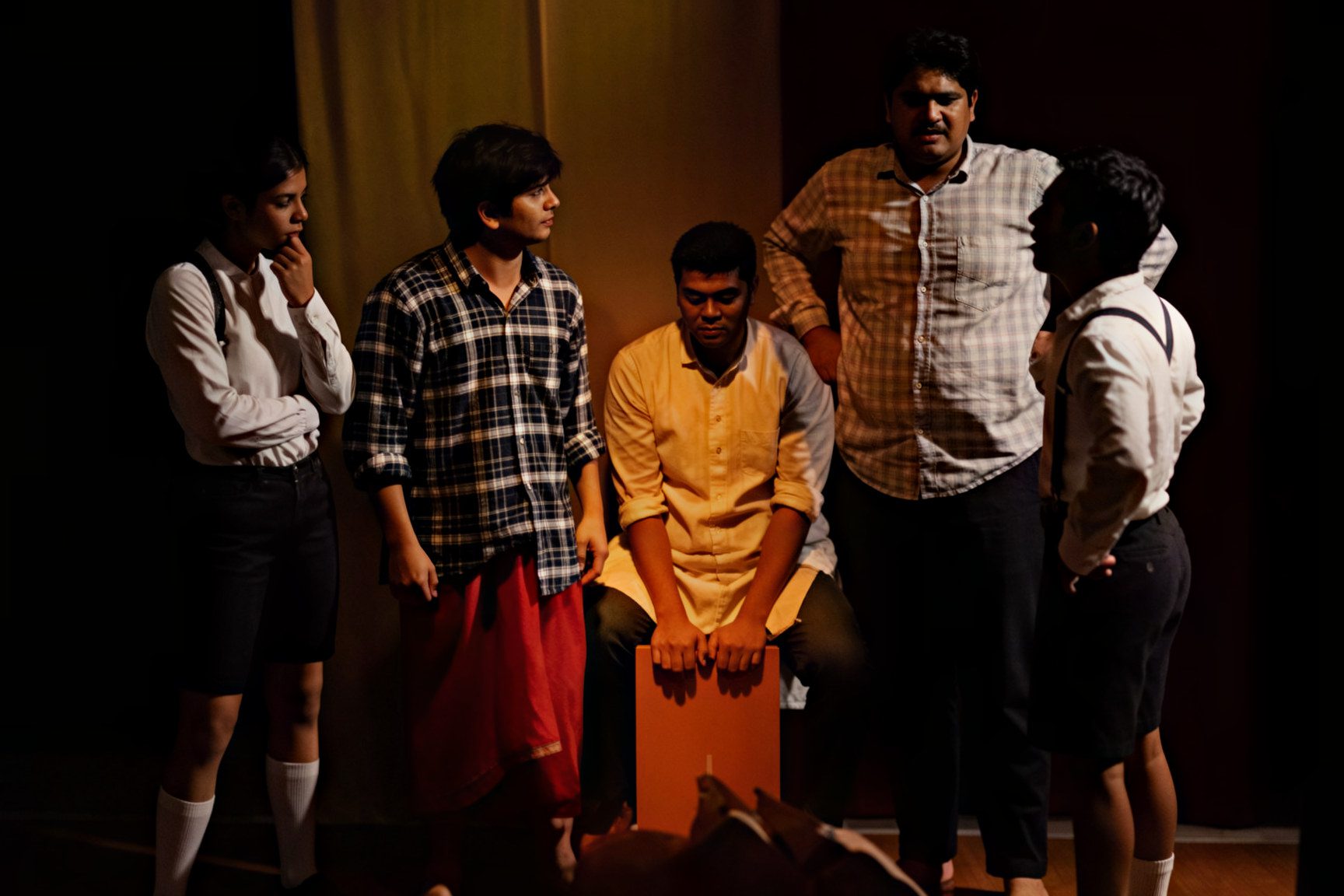
There is a moment that every actor remembers but rarely talks about.
It comes long before the applause. Before the opening night. Before the first performance. Even before the moment they learn they have been cast.
It is something quieter, stranger, and, in many ways, more significant than all of those moments combined.
It is the first rehearsal.
A first rehearsal is where actors meet the director and fellow cast members for the first time.
This is where the real creative journey begins.
Listening, discovery, and openness matter more than perfection.
The room. The people. The scripts.
Suddenly, the thing you have been preparing for in your imagination is no longer imaginary.
For the first time, it is actually beginning.
he character you have been thinking about now exists in a shared space, in real time.
Your fellow actors are searching too. They are just as uncertain, standing at the beginning of something none of you can yet fully see.
For over sixteen years, Rangshila Theatre Group has witnessed hundreds of first rehearsals.
Today, it is recognised as one of the most respected acting schools in Mumbai.
We have noticed something consistent.
Actors who understand the true purpose of a first rehearsal begin their journey differently.
They know what the rehearsal demands and what it has to offer.
They move forward with greater clarity and openness.
In contrast, actors who arrive with fixed expectations and pre-planned performances often limit their own growth.
This blog explores what actually happens in a first rehearsal-and why it changes everything.
What Most Actors Expect – And Why They Are Wrong
Most actors, especially beginners, arrive at their first rehearsal with one of two expectations.
Surprisingly, both are wrong.
The first expectation is that a first rehearsal is simply an informal run-through.
A casual, low-stakes session where nothing important happens and nothing is expected. In this version, the first rehearsal is essentially a formality before the real work begins.
The second expectation is the opposite.
Many actors believe the first rehearsal is simply another audition.
They assume the director and fellow cast members are judging every choice they make and forming lasting impressions.
Neither belief is true.
The second, however, is far more damaging.
It encourages actors to arrive with a half-formed performance, fixed choices, and an approach they are unwilling to chan
A locked performance has nowhere to go.
The first rehearsal is not an evaluation. It is an opening. And the actors who understand this are the ones who gain the most from the experience.
1. The First Rehearsal Is a Meeting – Not a Performance
The most important thing to understand about a first rehearsal is its purpose: it is a meeting.
It brings actors and the director together for the first time.
It also connects each performer with their character and the entire company with the world of the play.
Actors also begin discovering their scene partners.
They observe how others inhabit the space, what they bring to the room, and how every interaction shapes the scene.
Instead, directors communicate through the questions they ask, the energy they bring to the room, and what they choose to notice or explore.
Learning to read these signals is an essential skill for every actor.
At Rangshila Theatre Group, our training prepares actors for the collaborative nature of the rehearsal process.
The Craft stage of our programme develops genuine listening and responsiveness. Students learn to receive what is happening in the room and respond truthfully instead of relying on a pre-planned performance.
2. The Unexpected Discoveries
One of the biggest surprises of a first rehearsal-even for experienced actors-is how much it reveals that solo preparation simply cannot.
A line that felt straightforward while rehearsing alone can carry unexpected emotional weight when spoken to another actor for the first time.
A scene that seemed to have one clear meaning may suddenly reveal several possibilities once it is explored in the rehearsal room.
Even a character you thought you fully understood can surprise you through collaboration.
These discoveries are not signs of poor preparation. They are the reason first rehearsals matter.
Actors who prepare thoroughly but remain open to surprise make the greatest discoveries. They allow the rehearsal room to challenge and reshape their choices instead of holding on to them too tightly.
Discovery is not only about the work. It is also about the people.
Discovery is not only about the work. It is also about the people.
Every actor brings different instincts, experiences, and ways of inhabiting a scene. Meeting those differences for the first time naturally changes your own approach in ways that solo preparation never could.
3. The Fear Every Actor Feels During the First Rehearsal
There is something else that happens in most first rehearsals that is rarely acknowledged openly: fear.
It is not always the obvious, paralysing kind of fear.
More often, it is a quieter anxiety that settles in before the room does. You become aware that your choices will be seen, that you are exposing something personal, and that you are stepping into a journey whose destination is still unknown.
This fear is not a problem to solve. It is energy-and, like all energy in acting, it can be used.
Actors who learn to welcome that nervousness instead of resisting it often become more attentive, more present, and more alive in the rehearsal room.
At Rangshila Theatre Group, The Outlook Training-the first stage of our programme-helps actors become comfortable in uncertain and exposed situations.
It develops the grounded attention needed to stay present, respond truthfully, and resist the temptation to hide behind a pre-planned performance.
4. What a Director Is Actually Watching For
Understanding what a director is looking for in a first rehearsal can significantly shift how an actor approaches it – and what they take away from it.
Most directors are not watching for polish or technical precision in a first rehearsal.
They are watching for something much more fundamental: genuine presence, the ability to collaborate, and the quality of an actor’s attention.
Is the actor truly listening to their scene partners, or simply waiting for their cue? Do they respond with openness, or are they trying to reproduce a performance they have already decided upon?
Directors value actors who prepare thoroughly yet remain flexible enough to let the rehearsal room shape their choices.
Directors are also watching for how actors respond to direction. The first rehearsal typically involves some degree of redirection – an invitation to try something differently, to approach a scene from a new angle, to discover something that the initial read did not reveal. How an actor receives and responds to this redirection is one of the clearest signals available about what it will be like to work with them through a full rehearsal process.
In addition, directors watch for the quality of relationship between actors. Whether they are genuinely affecting one another. Whether they are bringing something real to each exchange, or simply performing at each other. This relational quality – so central to great ensemble performance – begins to establish itself, or fail to, in the very first rehearsal.
5. How to Prepare for a First Rehearsal – And What Not to Do
Given all of this, how should an actor prepare for a first rehearsal? The answer is both simpler and more challenging than most actors expect.
What to Bring
- Thorough knowledge of the script
- Understanding of your character
- Curiosity about your fellow actors
- Openness to the director’s vision
- Physical and vocal readiness
What Not to Bring
- A finished performance
- Fixed interpretations
- Defensive certainty
- The need to impress
Consequently, the most important preparation for a first rehearsal is not technical but psychological – arriving with enough genuine openness that the room can actually affect you. And this psychological openness – the willingness to be surprised, changed, and shaped by what the rehearsal reveals – is something that can be deliberately cultivated through training.
6. Why the First Rehearsal Changes Everything
The first rehearsal changes everything because it is the moment when acting stops being a solo activity.
It becomes what it has always been: a collaborative, relational, live encounter between human beings.
All the preparation – the script analysis, the character work, the solo rehearsal of lines and physical choices – is necessary and important. However, it is all preparation for the moment of encounter. And the encounter changes everything.
It changes how you understand your character because characters only come alive in relationship and action.
It changes how you understand the play because its full meaning emerges when people perform it together.
And it changes how you understand yourself as an actor because the first rehearsal reveals strengths and limitations that solo preparation never can.
This is why Rangshila Theatre Group places such emphasis on live ensemble work throughout our training. Our productions – which have involved 250+ performances across 100 venues – give our students repeated experience of what it means to encounter a piece of work for the first time in shared space with other performers, and to navigate that encounter with openness, skill, and genuine creative courage.
How Rangshila Theatre Group Prepares Actors for the Rehearsal Room
Founded by Awnish Kumar Mishra on 18 January 2008, Rangshila Theatre Group has grown into one of the most trusted acting schools in Andheri West, Mumbai. Over the past sixteen years, we have trained more than 500 theatre enthusiasts, staged 250+ performances across 100 venues, and helped alumni build successful careers in theatre, Bollywood, television, and OTT platforms.
Our four-stage training programme-The Outlook Training, The Instrument, The Craft, and The Technique-is designed to prepare actors not only for the stage but for the entire creative journey. Beyond developing technical skills, our training nurtures psychological openness, collaborative thinking, truthful listening, and the confidence to embrace the discoveries that every first rehearsal brings.
Whether you are stepping into a rehearsal room for the very first time or looking to deepen your craft, our structured approach helps you become an actor who is present, responsive, and ready to work as part of an ensemble.
We offer acting classes in Mumbai through both weekday and weekend batches, along with acting classes for beginners in Mumbai for aspiring performers taking their first steps into theatre. Every programme combines professional training with practical rehearsal experience, ensuring students learn not just how to perform-but how to grow through the rehearsal process.
Key Takeaways
- A first rehearsal is about collaboration, not performance.
- Directors value openness, listening, and adaptability.
- Feeling nervous before a first rehearsal is completely normal.
- Great performances begin with curiosity rather than certainty.
- Every rehearsal is an opportunity for discovery and growth.
Frequently Asked Questions
Your first rehearsal is about listening, observing, and staying open, not trying to impress anyone. Arrive with a good understanding of the script, your character’s objectives, and their relationships, but be prepared to adapt your choices as the rehearsal unfolds. A first rehearsal is the beginning of a collaborative creative process, so curiosity and genuine presence are far more valuable than a polished performance.
In most theatre productions, fully memorising your lines is not expected for the first rehearsal. What matters more is a thorough understanding of the script, the character’s journey, the relationships, and the objectives within each scene. This allows you to focus on listening to your scene partners and responding truthfully in the rehearsal room instead of worrying about the words on the page.
Yes. Feeling nervous before your first rehearsal is completely normal, even for experienced actors. That nervousness is not a weakness-it is energy. Instead of trying to suppress it, learn to channel it into sharper attention, deeper listening, and greater presence. Many actors discover that this heightened awareness becomes one of their greatest strengths during the rehearsal process.
At Rangshila Theatre Group, rehearsal is viewed as a process of discovery rather than performance. Our training encourages actors to arrive thoroughly prepared while remaining flexible enough to respond to new ideas, direction, and the creative energy of the ensemble. Through our four-stage training programme, students develop the technical skills, collaborative mindset, and psychological openness needed to thrive in the rehearsal room and on stage.
The number of rehearsals varies depending on the production, the director’s process, and the complexity of the play. Some productions may require only a few weeks of rehearsals, while others involve a much longer schedule. At Rangshila Theatre Group, students experience a structured rehearsal process that gradually takes them from their first rehearsal to confident live performances, helping them understand every stage of theatrical production.
The Bottom Line
The opening night gets the applause. The audition brings the nerves. But the first rehearsal-that quiet, uncertain, electric gathering where something extraordinary is just beginning-is where the real work truly starts.
It is the moment when imagination meets reality, when solo preparation becomes collective discovery, and when the play stops being words on a page and begins to live through the people bringing it to life.
Walk into the rehearsal room with an open mind.
Stay curious.
Allow yourself to be surprised by what the rehearsal room reveals.
That is the greatest preparation a first rehearsal asks of you—and often, the most challenging.
If you are looking for an acting school in Mumbai where rehearsal is more than practice-where it becomes a space for discovery, collaboration, and artistic growth-Rangshila Theatre Group is ready to welcome you. Explore our Acting School in Mumbai programme or get in touch with us to begin your journey from your first rehearsal to your first performance.