
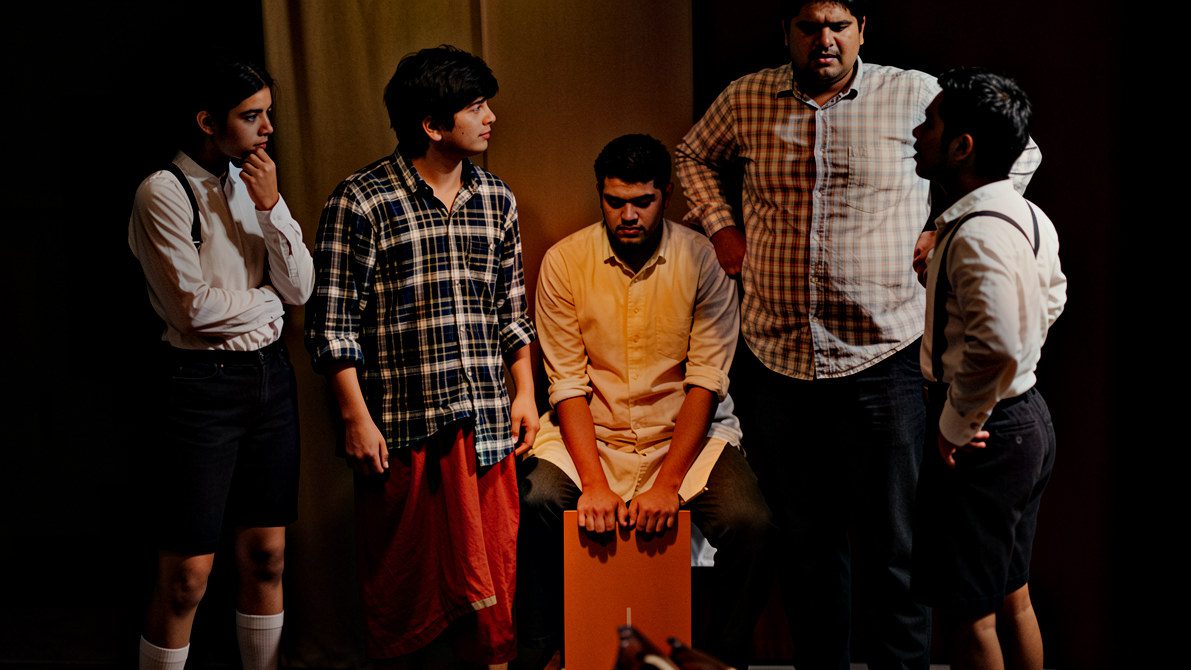
Imagine an understudy getting a call just two hours before curtain. The lead is sick and cannot perform that night. The understudy knows the role but may have had limited opportunities to rehearse with the full cast. Now, with the audience waiting, they must step into an established production and perform with confidence.
A theatre understudy is an actor who learns a principal role and prepares to perform it when the original actor is unavailable due to illness, injury, or another emergency. Unlike an actor creating a role from scratch, an understudy must fit into an existing production. This means following established blocking, timing, and performance choices, often with very little notice or rehearsal time. This article explores how understudies prepare and why understudying is such a demanding skill in professional theatre.
What Is an Understudy, and How Does It Differ From a Swing or Cover?
An understudy learns a specific principal role and prepares to perform it if the main actor is unavailable. They may have other responsibilities in the production, but they must be ready to step into the role at short notice. In many productions, understudies watch performances without regularly appearing on stage.
A swing performs a different role behind the scenes. Commonly used in musical theatre, the term refers to an actor who learns multiple ensemble tracks. A swing can step into whichever track needs coverage when another performer is absent. Since they may not know which track they will perform until shortly before curtain, swings need exceptional flexibility and preparation.
A cover is a performer trained to take over another actor’s role when necessary. In some productions, an ensemble member may cover a principal role alongside their regular duties. The terms understudy and cover are sometimes used interchangeably, while other productions treat them as separate roles.
Although the terminology varies across productions and countries, all three roles serve the same broader purpose: helping live performances continue when a performer is unavailable.
Why Understudies Exist: The Reality of Live Performance
Film and television can pause or reschedule filming when an actor is unavailable. Live theatre does not have the same flexibility. When the audience arrives for a performance, they expect the show to go ahead, regardless of what happens backstage.
That is why professional theatre productions use understudies as part of their regular planning—not simply as an emergency backup. Theatre unions, including Actors’ Equity Association in the United States and Equity in the United Kingdom, establish contractual provisions for understudy and swing roles. These arrangements help productions continue when performers are unavailable.
Understudy vs Swing vs Cover
| Role | What They Prepare | When They Perform |
| Understudy | One specific principal role | When the primary actor for that role is unavailable |
| Swing | Multiple ensemble tracks | When a specific track needs to be covered |
| Cover | Another performer’s role, alongside their own regular part in some productions | When the actor they cover is unavailable |
How Understudies Actually Prepare
Understudy preparation starts with close, detailed observation. Understudies watch rehearsals and performances, take careful notes on blocking, timing, vocal phrasing, and choreography, and learn the specific version of a role as it exists in a particular production. They’re not simply learning a role in the abstract; they’re learning how their character fits into the established performances and choices of the rest of the company.
Many productions schedule separate understudy rehearsals, where understudies run scenes together, sometimes with a stage manager or assistant director standing in for principal cast members who aren’t available to rehearse. Some productions also hold a put-in rehearsal, a dedicated session in which an understudy rehearses their role within the existing production, often with members of the cast and relevant technical elements. The format and extent of these rehearsals vary, and not every understudy gets a full run-through with the entire company before performing in front of an audience.
To understand how structured theatre training develops performance skills, read What Happens in a Theatre Workshop? From Exercises to Performance Skills .
Because an understudy may go weeks or months without actually performing, staying vocally, physically, and mentally ready for a role that might be needed at any moment requires ongoing personal discipline. Regular review of lines, blocking, and performance details helps understudies stay prepared, even when they have little opportunity for regular stage time.
The Unique Emotional Demands of Understudying
Understudying asks something genuinely difficult of an actor: sustained readiness for an opportunity that may rarely or never actually arrive. Preparing a full role in detail, only to spend most performances watching from the wings or waiting offstage, requires a particular kind of professional resilience that doesn’t get discussed nearly as often as the craft skills involved.
Understudying is sometimes treated dismissively, as a consolation role rather than a genuinely demanding professional position in its own right. In reality, maintaining performance-level readiness over an extended period, often without regular rehearsal or stage time to reinforce it, requires patience, discipline, and a strong sense of professional commitment.
Common Misconceptions About Understudies
There’s a persistent assumption that understudies are simply less talented than the actors they cover, brought in as a lesser backup option. However, understudying presents a distinct set of technical challenges. An understudy has to integrate seamlessly into an already established production, matching another actor’s blocking, timing, and choices, often with far less rehearsal time than the original cast received.
There’s also an assumption that understudies rarely actually go on, but this varies enormously by production and circumstance. Going on with little notice, sometimes mid-run and, in rare cases, even mid-performance if an actor becomes unable to continue, can be a defining professional experience for a working theatre actor. Such moments can test an actor’s preparation, adaptability, and composure under pressure.
What Understudy Training Teaches Every Actor
Even actors who never formally understudy a role can benefit from understanding what the position demands. Sustained readiness under uncertainty, careful observation, precise retention of blocking and timing, and composure under pressure are all transferable skills that can strengthen an actor’s professionalism, regardless of whether they ever hold an understudy position.
Understudying also develops a particular kind of ensemble awareness-the ability to integrate into a group’s existing choices rather than developing a performance in isolation. This is a skill every actor can benefit from, since professional performances depend on collaboration with an established cast and production team.
The ability to adapt to an established production also connects closely with how actors respond to feedback and direction. Read How Actors Take Direction: Turning a Director’s Note Into a Better Performance to explore this skill further.
How Rangshila Theatre Group Builds These Skills
Founded by Awnish Kumar Mishra on 18th January 2008, Rangshila Theatre Group, an acting school in Mumbai , has trained more than 2,000 students in Versova, Andheri West, Mumbai. The observational and adaptive skills that understudying requires are also developed through our training.
The Outlook stage encourages students to develop detailed observational habits, helping them notice specific choices in another performer’s work rather than relying only on general impressions. The Craft and Technique stages help students build retention, precision, and composure under pressure-skills that can support their ability to adapt to an existing production and benefit them throughout their acting careers.
Our faculty, trained at institutions including BNA and NSD, bring professional theatre experience into the learning environment. This helps students develop a deeper appreciation for disciplined, ensemble-aware preparation and the demands of working in theatre.
The Bottom Line
An understudy’s role involves preparing a full, detailed performance, integrating it into an established production, and staying ready to step in at a moment’s notice, possibly for months without ever performing. It requires careful observation, strong retention, adaptability, and composure under pressure. Although understudies may spend long periods waiting for an opportunity, their preparation is an important part of keeping live theatre running.
If you’re interested in developing precise, adaptable performance skills, explore our [acting classes in Mumbai]
FAQs
An understudy prepares one principal role, while a swing prepares multiple ensemble tracks and fills in when a specific track is unavailable.
It can range from advance notice to just a few hours before the performance, depending on the situation.
A put-in rehearsal is a dedicated session where an understudy practises their role within the existing production, often with cast members and technical elements.
No. Understudying requires strong preparation, adaptability, and the ability to follow an established production with limited rehearsal time.
They regularly review lines, blocking, and performance details while maintaining their vocal, physical, and mental preparation.