
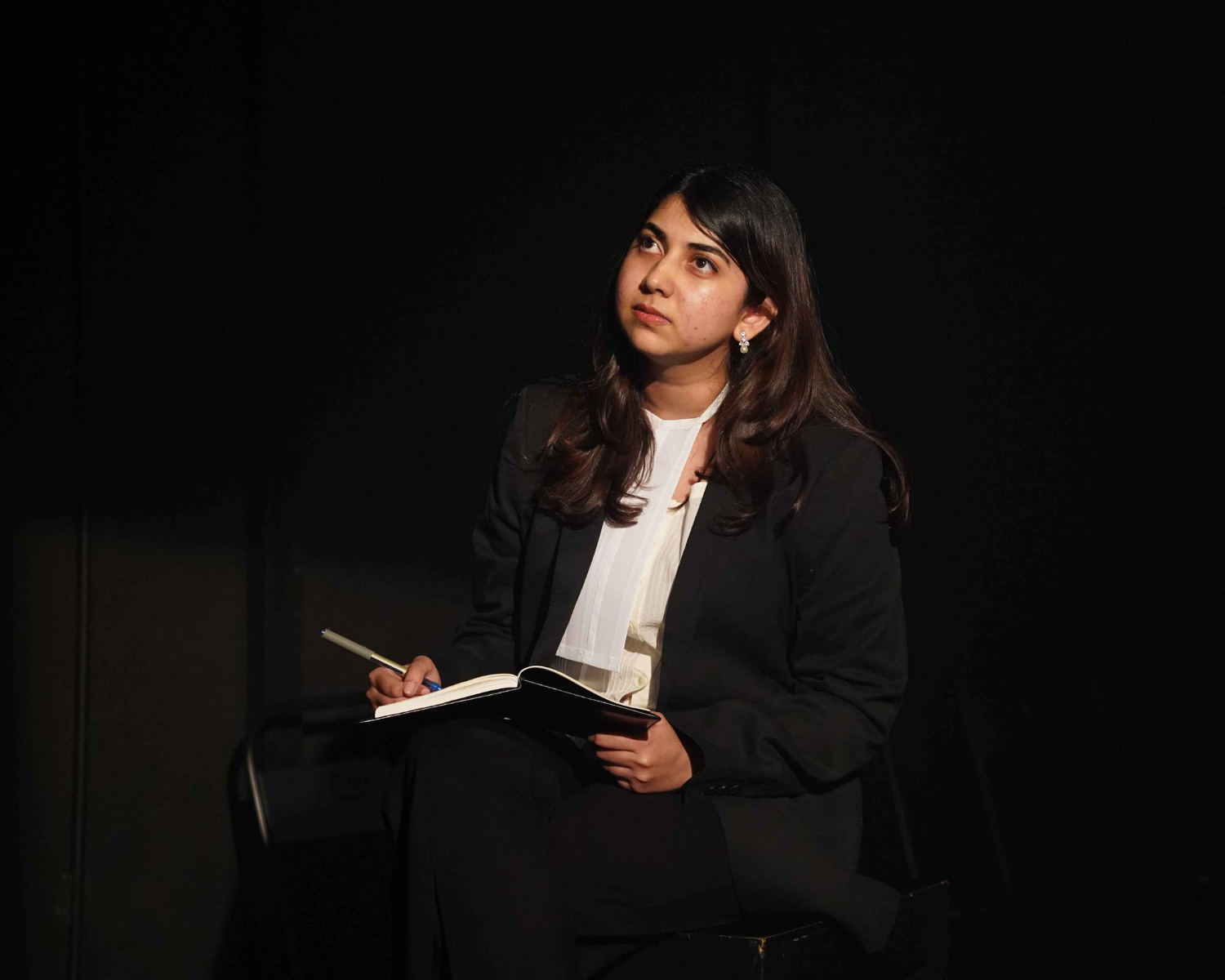
When people imagine an actor, they often picture someone confident, outspoken, highly social, and comfortable being the centre of attention.
But acting does not require you to be the loudest person in the room.
Introverts can become excellent actors. In fact, qualities often associated with introversion-such as observation, listening, reflection, patience, and attention to detail-can become valuable acting skills when developed through proper training.
Being introverted does not mean being incapable of performing in front of an audience. It simply means that you may naturally prefer reflection and smaller social settings to constant external stimulation.
So, can introverts be actors? Absolutely.
The real question is not whether you are introverted or extroverted. It is whether you are willing to observe, practise, take direction, understand characters, and gradually become comfortable performing.
At Rangshila Theatre Group, we believe acting training should help students develop their individual strengths while also expanding the areas where they need more confidence.
What Does It Mean to Be an Introvert?
It is important to first separate introversion from shyness. Shyness is the fear of social judgement, while introversion is about where you draw your energy from.
Introverts often recharge through olitude and inner reflection. They tend to observe more, listen deeply, and think carefully before they speak.
These are not weaknesses. In the world of acting, they can become real strengths. At Rangshila Theatre Group, we often notice that introverted students naturally excel in observation, listening, and emotional memory exercises, because of these qualities.
Whether you are just beginning your journey in acting or already exploring theatre professionally, understanding your personality type is one of the first steps toward becoming a stronger and more self-aware performer.
The Quiet Advantage: Why Introverts Often Excel in Acting
1. Introverts Notice What Others Miss
Introverts often notice details others miss. While others may react quickly in a situation, introverted individuals tend to pause, notice, and absorb subtle expressions, body language, tone shifts, and emotional changes.
In acting, this ability becomes a powerful advantage. Great performances are built on small, truthful details – a glance, a hesitation, a shift in energy – things that many people overlook but audiences instinctively feel.
Because introverts are naturally attentive and reflective, they often bring a higher level of authenticity to character work. They are able to study human behaviour quietly and translate those observations into layered, believable performances on stage and screen.
At Rangshila Theatre Group, we often see that students with strong observational habits develop deeper character understanding and more grounded performances over time.
2. They Listen Before They React
Acting is not about performing emotions; it is about responding truthfully to what is happening in a scene. One of the most common mistakes beginners make is focusing so much on delivering their own lines that they stop truly listening to their scene partner.
Introverts are naturally inclined to listen first. They absorb what is being said before reacting. This makes them strong scene partners – present, responsive, and believable.
It is no coincidence that some of the most respected acting techniques in the world, including the Meisner Technique, are built around listening and truthful response.
In any serious acting workshop, the ability to truly listen is often what separates a good actor from a great one.
3. Deep Emotional Access
Introverts spend a significant amount of time in their inner world – processing emotions, revisiting experiences, and examining feelings from different angles. This emotional awareness can become a major advantage in acting.
Techniques such as sense memory and emotional recall require actors to access personal experiences and channel them into a character with honesty and depth.
Because introverts are already comfortable with self-reflection, they often find this process more natural and emotionally authentic.
At Rangshila Theatre Group, emotional exploration and character work form an important part of the actor training process.
4. Comfort with Stillness and Silence
Some of the most powerful moments in theatre and film are not dramatic monologues or emotional outbursts. They are moments of silence – the pause before a difficult truth is spoken, or the stillness after devastating news.
Introverts are rarely uncomfortable with silence. They know how to exist within it naturally.
On stage and on camera, this creates a magnetic quality. Instead of rushing to fill every moment with movement or noise, they allow emotions to breathe.
Faculty members at Rangshila Theatre Group often notice that introverted students develop control over stillness and subtle expression much earlier than expected.
5. They Commit Fully to Preparation
Acting is not just about what happens during a performance. Much of the real work happens beforehand – through script analysis, rehearsals, character research, and personal reflection.
Introverts tend to thrive in this process. They are comfortable spending time alone with a script, asking deeper questions about a character’s fears, motivations, desires, and emotional conflicts.
This level of preparation is often what transforms a decent performance into a memorable one.
Rangshila Theatre Group’s structured training approach encourages exactly this kind of thoughtful and disciplined preparation.
6. They Are Less Likely to Perform – And More Likely to Truly Act
There is a critical difference between performing and acting.
Performing is showing the audience that you are sad.
Acting is about truly experiencing emotion within the reality of the scene.
Because introverts are often less focused on external attention, they naturally lean towards authenticity instead of exaggerated performance.
This honesty is what audiences connect with most deeply. It is what makes a performance feel real instead of rehearsed – and it is increasingly valued across theatre, film, and OTT storytelling today.
Famous Introverted Actors Who Proved the World Wrong
This is not just theory. History is full of performers who proved that introversion is not a limitation but a strength in acting.
Meryl Streep, widely regarded as one of the greatest actors of all time, has openly spoken about being an introvert. Her emotional depth and extraordinary preparation reflect the strengths of a deeply introspective performer.
Glenn Close has also described herself as private and reflective – qualities that help her disappear completely into layered and emotionally complex characters.
Closer to home, Irrfan Khan became known for his quiet yet powerful performances, proving that subtlety and emotional truth often leave the strongest impact on screen.
But What About the Fear of Being Seen?
One real challenge many introverted actors face is not the craft itself, but the discomfort of being watched.
Standing on stage in front of an audience can feel overwhelming at first, but at Rangshila Theatre Group, we have often observed that this discomfort begins to fade much faster than students expect.
The reason is simple.
When you fully commit to a character – when you truly understand who that person is – your attention naturally shifts away from yourself. You stop worrying about the audience and instead focus on living truthfully as someone else in the moment.
This shift from self-consciousness to character immersion is something introverted actors often adapt to very effectively once they begin trusting the process.
With consistent practice, rehearsals, and live performance experience, many students gradually discover that confidence on stage develops naturally over time.
Weekend and Flexible Acting Classes in Mumbai – Built for Every Personality Type
One of the most common concerns aspiring actors have is that an acting school environment might feel overwhelming – too noisy, too crowded, or too socially demanding.
At Rangshila Theatre Group in Versova, Andheri West, we have designed a learning space that supports different personality types and comfort levels.
Our batches are structured to remain focused and interactive, ensuring that every student receives personal attention along with enough space to grow with confidence.
We also offer flexible schedules, including weekend acting classes in Mumbai, allowing students to learn at a pace that feels comfortable, balanced, and sustainable rather than rushed or pressured.
Whether you are just beginning your acting journey or looking to train more seriously, our programmes are designed to support your growth at every stage.
How Rangshila Theatre Group Supports Introverted Actors
At Rangshila Theatre Group, founded by Awnish Kumar Mishra in 2008, we understand that every student brings a unique personality and emotional rhythm into the training space.
Our goal has never been to force students into a single extroverted mould. Instead, our four-stage training programme – The Outlook Training, The Instrument, The Craft, and The Technique – is designed to work with each student’s natural strengths while gradually expanding their range as performers.
For introverted students, this includes:
- Observation exercises that sharpen natural attentiveness
- Scene study sessions focused on genuine listening and truthful response
- Sense memory work that develops emotional depth and self-awareness
- Camera acting classes where subtle and natural performances are encouraged
- Live stage performances that build confidence in a structured and supportive environment
With over 500 theatre enthusiasts trained, 250+ performances across 100 venues, and alumni working across theatre, film, and OTT platforms, Rangshila Theatre Group continues to grow as a trusted acting institute in Mumbai and a supportive space for aspiring performers to develop their craft.
The Bottom Line
The idea that acting is only meant for those who are loud, bold, and socially fearless is one of the biggest myths in the performing arts.
In reality, acting demands many of the qualities introverts naturally develop over time – observation, emotional depth, deep listening, thoughtful preparation, and comfort with silence.
If you are an introvert who has ever felt drawn to acting but held yourself back because you believed you were “not the type,” remember this:
You might actually be exactly the right type.
At Rangshila Theatre Group, we believe that great performances do not come from being the loudest person in the room. They come from honesty, emotional awareness, and the ability to connect truthfully with a character.
If you are looking to explore acting in a supportive and structured environment, our acting classes in Mumbai are designed to help you discover and develop your unique performing voice.
Your quiet strength might just become your greatest gift on stage.
Frequently Asked Questions
Q1. Can introverts really succeed in acting?
Absolutely. Introversion is not a barrier to acting – it is often an advantage. Introverts often possess strong observational skills, emotional depth, and comfort with stillness, all of which are valuable qualities in a strong performer. At Rangshila Theatre Group, many introverted students discover that their quiet nature actually helps them connect more truthfully with characters.
Q2. Do I need to be outgoing to join an acting school?
Not at all. Good acting training helps you use your natural personality as a strength rather than forcing you to become someone else. Whether you are quiet, reserved, expressive, or energetic, the goal is to develop honesty and confidence in performance.
Q3. How does acting training help introverts build confidence?
Acting training builds confidence gradually through observation exercises, scene study, rehearsals, voice work, and live performances. Over time, many introverted actors find that focusing on a character helps them become less self-conscious and more emotionally present on stage.
Q4. Is there a difference between being shy and being an introvert as an actor?
Yes. Shyness is connected to the fear of judgement, while introversion is simply about how a person recharges emotionally. Many introverted actors are highly confident performers once they step into a character and feel connected to the scene.
Q5. What acting techniques work well for introverted actors?
Techniques such as Sense Memory, Emotional Recall, and the Meisner Technique often work especially well for introverted actors because they focus on emotional truth, listening, and authentic human behaviour rather than exaggerated performance.